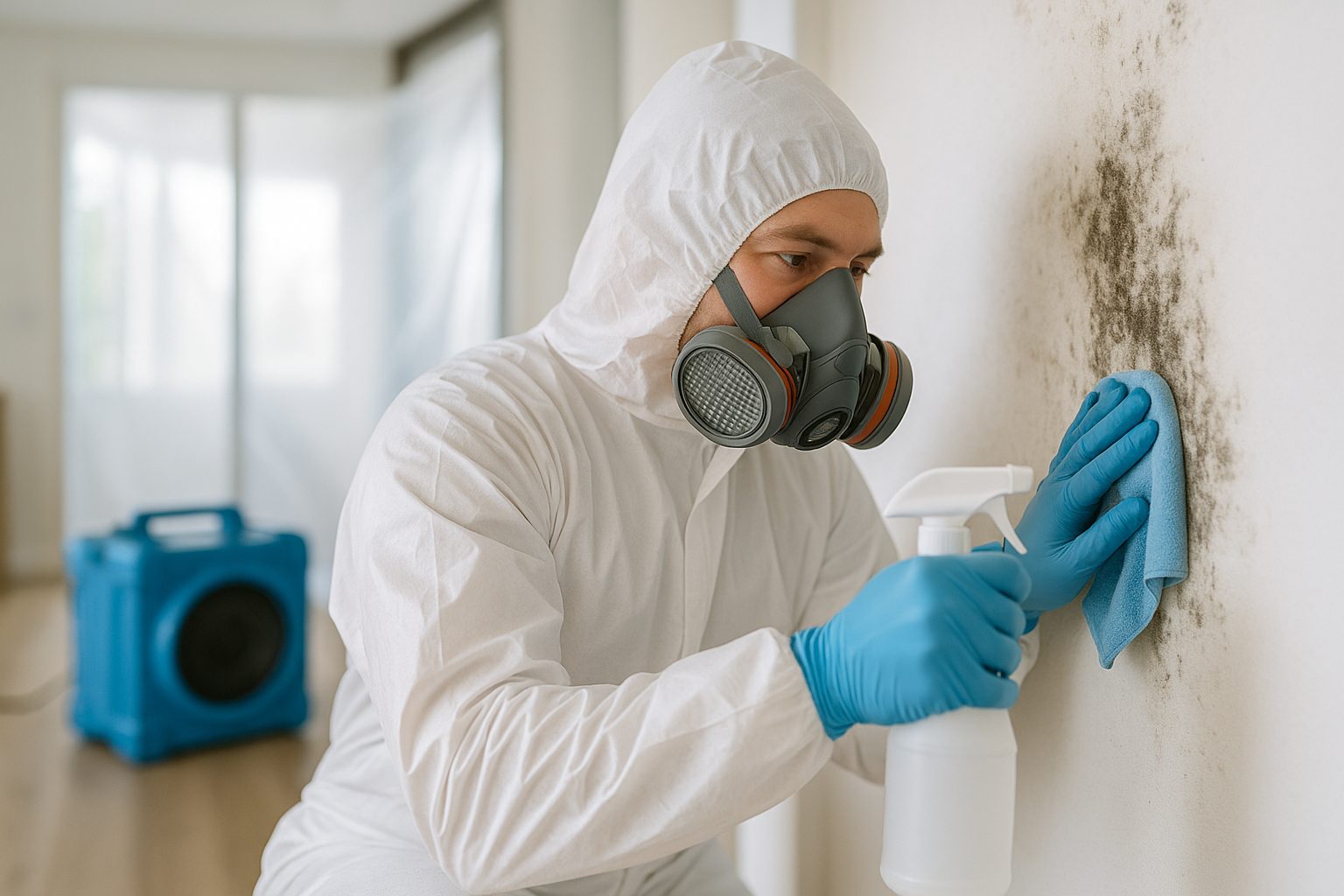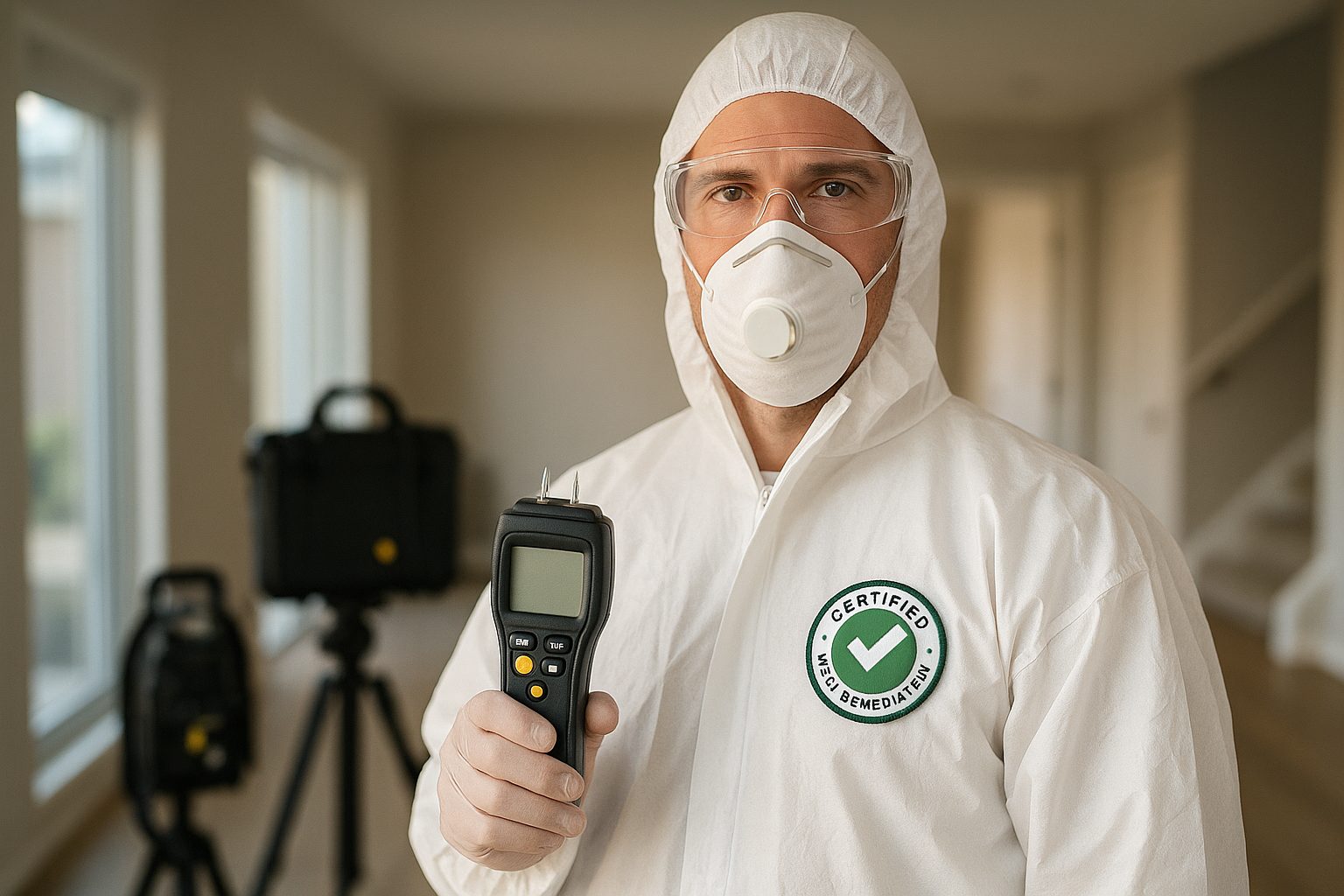
"Certified" gets stamped on a lot of mold company websites. Some of it is real and meaningful. Some of it is marketing. This guide explains the credentials that actually matter, what the IICRC standard covers, and why a contractor's license depends entirely on the state you live in.
Knowing the difference lets you read past the logos and judge a crew on what they can prove.
Key takeaways
- IICRC certification is a professional qualification, not a government license; the ANSI/IICRC S520 is the standard that governs mold work.
- Look for AMRT (Applied Microbial Remediation Technician) and WRT (Water Damage Restoration Technician) credentials on the crew.
- Mold licensing is set state by state — Florida, Texas, Louisiana, New York, Maryland, and Virginia license contractors; many states don't.
- No one is "EPA certified" for mold; the EPA publishes guidance but doesn't license or certify contractors.
- In non-licensing states the screening falls to you, so lean harder on IICRC certification, insurance, and references.
What IICRC Is and What S520 Covers
IICRC stands for the Institute of Inspection, Cleaning and Restoration Certification. It's an independent, nonprofit body that writes standards for the restoration industry and certifies the technicians who follow them. It isn't a government agency, so an IICRC credential is a professional qualification, not a license.
The document that governs mold work is the ANSI/IICRC S520 Standard for Professional Mold Remediation. It defines how mold should be assessed, contained, removed, and cleared, including containment barriers, worker protection, and the principle that you fix the moisture source rather than just wiping away what's visible. When a crew says they "work to S520," that's the benchmark they mean.
Two technician certifications worth looking for:
- AMRT — Applied Microbial Remediation Technician, the IICRC certification built around mold and microbial work.
- WRT — Water Damage Restoration Technician, since most mold problems start with a water problem.
Mold Licensing Varies by State
This is the part that confuses people. There is no national mold license. Whether a contractor needs one depends on the state.
Several states regulate mold work and require a license to perform it, including Florida, Texas, Louisiana, New York, Maryland, and Virginia. Each runs its own board, its own exam, and its own renewal rules. Plenty of other states have no mold licensing at all, which means anyone can advertise the service regardless of training.
So your first move is to find out what your state requires. In a licensing state, ask for the license number and verify it on the state board's lookup tool. In a non-licensing state, the burden shifts to you: lean harder on IICRC certification, insurance, and references, because the state isn't doing that screening for you.
Inspector vs. Remediation Contractor: Why Some States Split Them
There are two distinct roles in a mold project, and they shouldn't always be the same company.
An inspector or assessor evaluates the problem, identifies the moisture source, and writes the scope of work. A remediation contractor does the physical removal. The relevant credentials differ too: assessors often hold titles like Certified Industrial Hygienist (CIH) or Council-certified Indoor Environmental Consultant (CIEC), while remediators carry the IICRC AMRT.
States like Florida and New York require these roles to be separate on licensed projects, and for a clear reason. If one company both assesses the job and gets paid to do it, there's pressure to find more work than may exist, and later to declare it finished whether it is or not. An independent assessment up front and independent clearance testing at the end remove that pressure. Even where the law doesn't require the split, it's the safer way to hire.
EPA Guidance on Mold Cleanup
The U.S. Environmental Protection Agency publishes free guidance, including "A Brief Guide to Mold, Moisture and Your Home." Worth knowing what it does and doesn't say:
- The EPA does not certify or license mold contractors. Anyone claiming to be "EPA certified" for mold is overstating it.
- The EPA suggests that for mold covering more than about 10 square feet, you consider hiring a professional.
- Its core message is consistent across the industry: fix the water problem, or the mold returns.
Use the EPA material as a baseline. The contractor's actual qualifications come from state licensing and IICRC certification, not from the EPA.
How to Check a Contractor's Credentials
Run through this quickly before you commit:
- Confirm whether your state licenses mold work, and verify the license number if it does.
- Ask for IICRC certification, specifically AMRT and WRT, and the technician names.
- Confirm the company works to the ANSI/IICRC S520 standard.
- Get current liability and workers' comp certificates, plus proof of bonding.
- Confirm clearance testing is handled by an independent party, not the remediator.
For the full hiring walkthrough, see how to hire a mold remediation company.
How MoldRemediation.io Helps
MoldRemediation.io is a referral service. We connect homeowners with independent local crews who are licensed where their state requires it, bonded, insured, and certified. We don't perform the work or hold the certifications ourselves, the contractors we match you with do.
Want help finding a properly credentialed crew near you? Call (877) 349-1231 or reach out here, or read more about certified mold remediation services.
Frequently Asked Questions
Is IICRC certification a license?
No. IICRC is an independent professional certification body, not a government agency. A license, where required, comes from your state.
What is the S520 standard?
ANSI/IICRC S520 is the industry standard for professional mold remediation. It sets how mold should be assessed, contained, removed, and cleared.
Can a company be "EPA certified" for mold?
No. The EPA publishes guidance but does not certify or license mold contractors. Treat that claim as a red flag.
Do I need a licensed contractor?
It depends on your state. Some states require a mold license; many don't. Where there's no requirement, lean on IICRC certification, insurance, and references instead.